Modular weather station based on Raspberry Pi

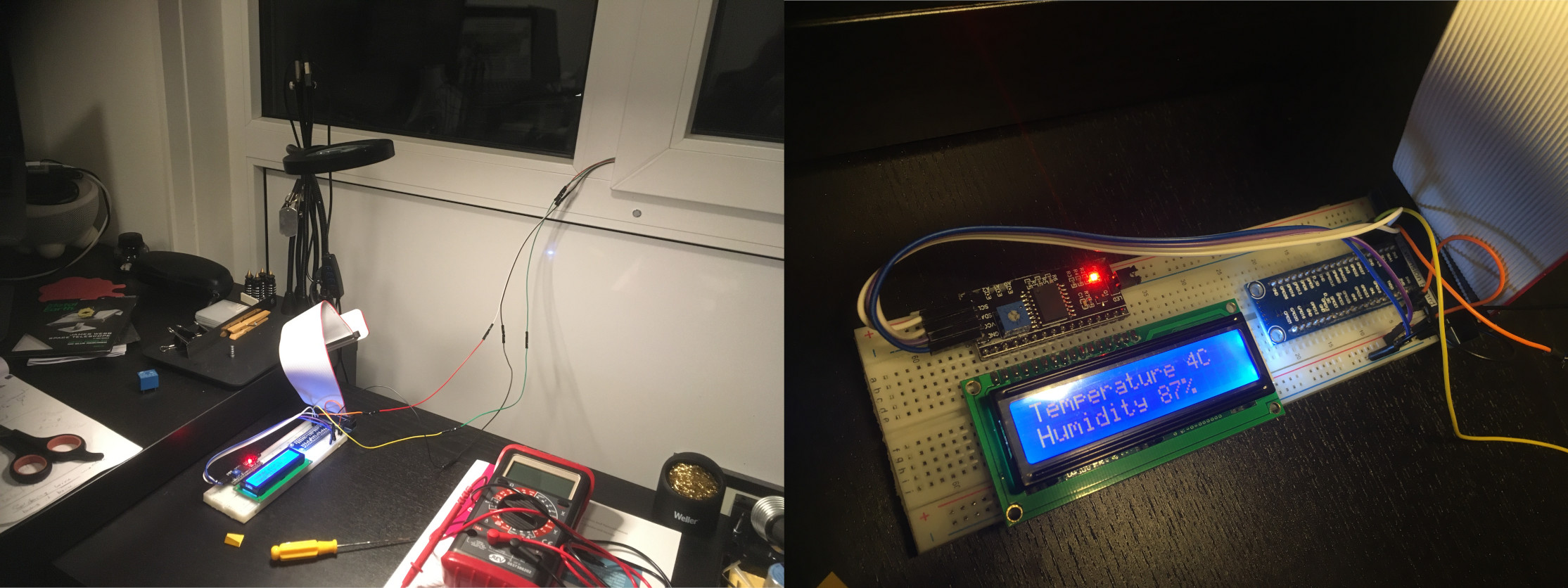
After my PostDoc ended, it took about 1 year to get my current position at TU Delft (Data Manager for the Ruisdael project). While unemployed, I decided to start monitoring weather conditions in my garden, and for this I used a Raspberry Pi to log the data. For measuring the environmental variables, I chose an integrated sensor (BME680) that measures temperature, pressure, humidity and volatile organic compounds. I also wanted to be able to see the current measurement for practical reasons. For example, what is the temperature outside? To quickly see the data in real time, I added a 16x2 LCD display to the project. Below is the prototyping setup.
After a few months back at TUD, I began supporting a student’s fieldwork course. One of the projects was to measure weather variables at different locations in Rotterdam. However, no instrument was available for this purpose, so I suggested using Raspberry Pis with low-cost sensors. In addition to BME680, this second version had 2 other sensors: a particle counter (SPS30) and a GPS (Whadda module).
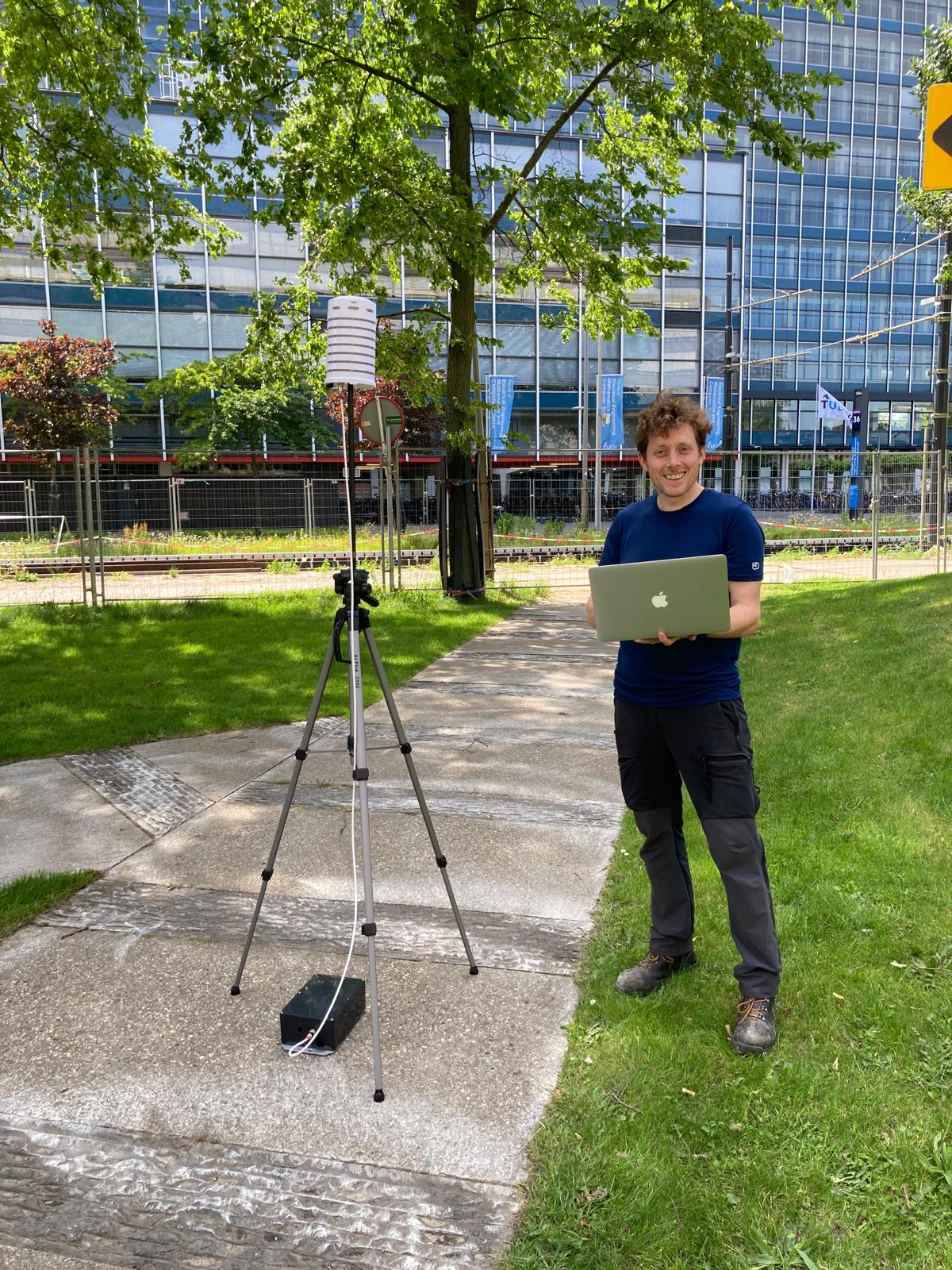
I used the initial version of the software from my garden station as a starting point for this project. The picture below shows the final version of the station hardware, which was idealised together with my colleague Rob.
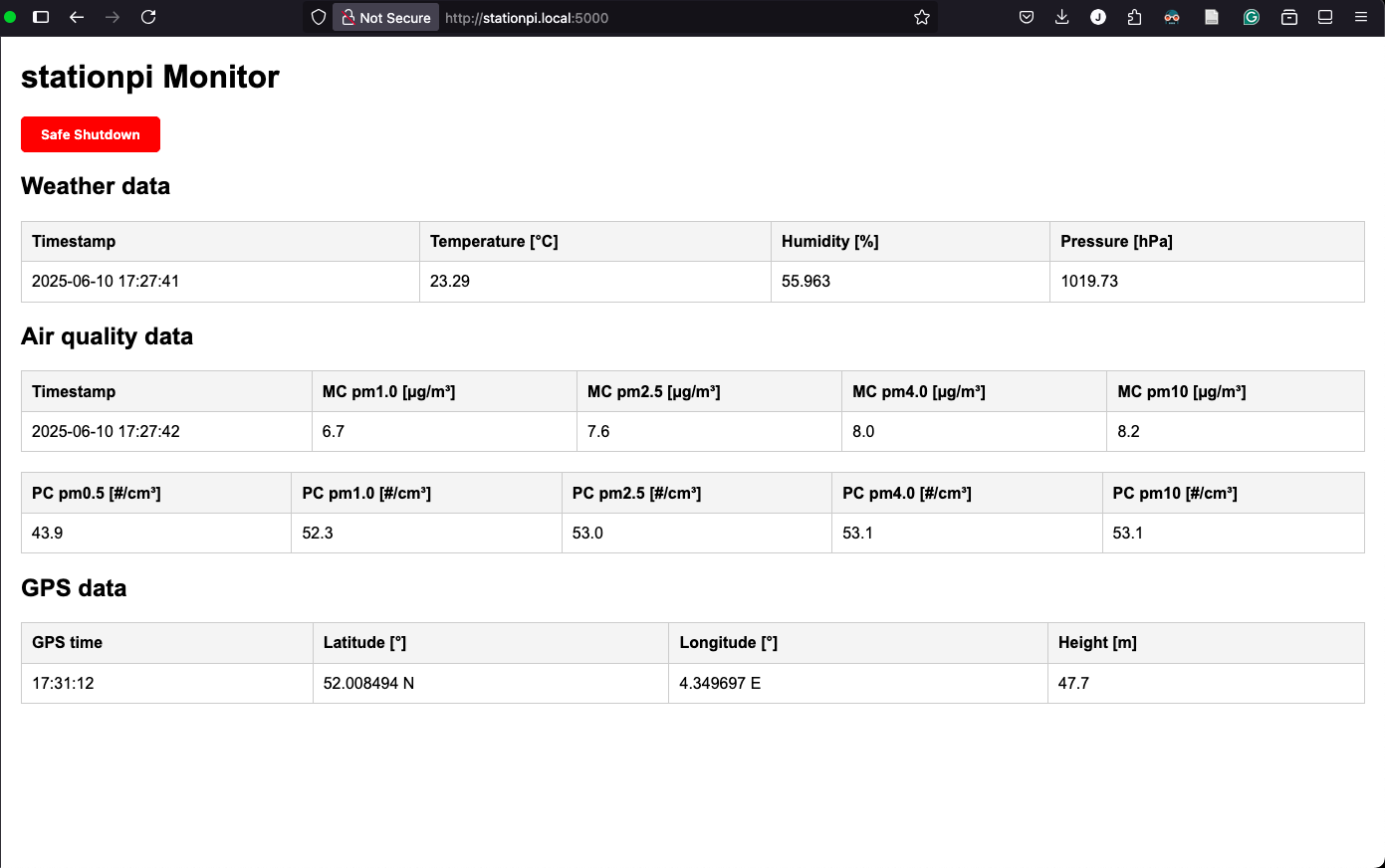
This last version of the controlling software includes some addtional improvements over the original project. The station creates its own local Wi-Fi network, allowing users to connect with a smartphone or laptop. Once connected to the station network, the user can have access to a web-based real-time monitoring interface. While connected, the user can also download all collected data. Below you can see how the web interface looks.